
Interaction Styles
By Linda Berens

Linda V. Berens, Ph.D., is recognized internationally for her theoretical contributions to the field of psychological type, for developing related models, and for developing user-friendly training materials that apply practical understanding to individual differences. In addition to training a generation of type professionals, Berens is a human and organizational development practitioner who has helped individuals and teams recognize their strengths, transcend their weaknesses, and work together better. Berens founded InterStrength Associates and developed an integrated framework for individual differences through a three-model approach: Interaction Styles®, Essential Motivators and InterStrength™ Cognitive Dynamics. Berens is a former APTI President and long-time contributor to the type world.
Why Interaction Styles?
The Interaction Styles lens is rooted in social styles research done in the US in the 1920s.[1] Because Interaction Styles looks at personality from another perspective, it provides insights that you cannot get from using only psychological type. Berens’ expertise in the 16 Types and Temperament models enabled her to develop a version of social styles that integrates well with these models.
Interaction Styles is a powerful addition to your personality type toolbox. It is based on behavioral and neurological observations and research—not on the internal mental functions of psychological type. What you learn from the model compliments your understanding of type. Using this lens gives you powerful insights and extends your understanding of yourself and others.
Interaction Styles®: The “HOW” of Us
Interaction Styles are patterns of behavior—not a set of traits. These patterns are organic and derive from neurophysiological tendences. We naturally use one pattern over the others. An Interaction Style is a pattern of communication. Berens refers to Interaction Styles as “the ‘HOW’ of us,” as in how we choose to influence and engage with other people.
There are four Interaction Styles:
- Chart-the Course
- Behind-the-Scenes
- In-Charge
- Get-Things-Going
Interaction Styles have three main elements:
- Communication—Ways We Influence Others
- Directing
- Informing
- Roles—Ways We Define Relationships
- Initiating
- Responding
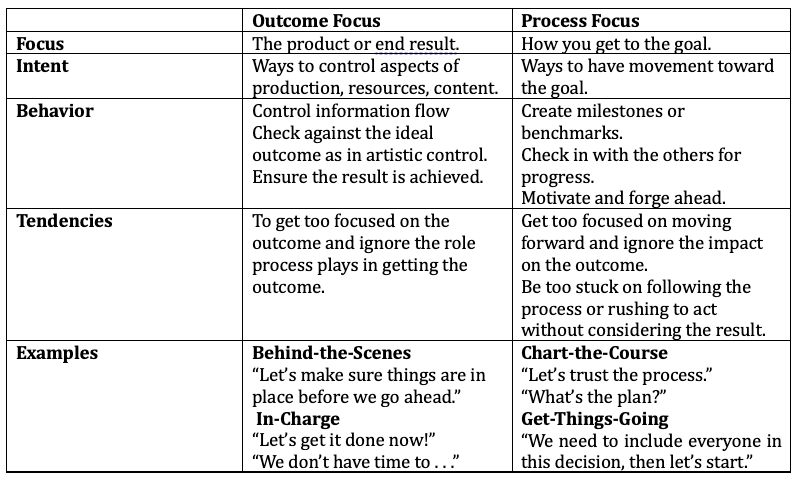
- Attention and Interest—Ways We Focus
- Outcome Focus
- Process Focus
Table 1: Roles and Communication Elements of the Four Interaction Styles
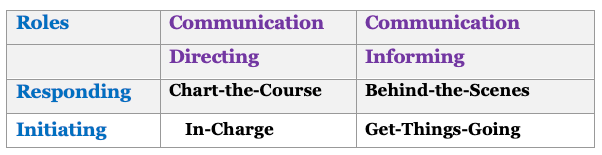
Table 2: The Focus Element of the Four Interaction Styles

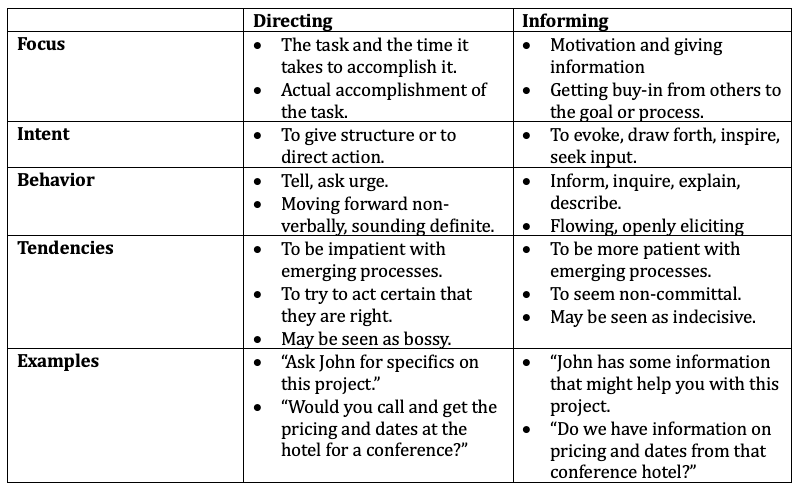
Communication: Directing and Informing Language
While we use both directing and informing language, we tend to prefer one style over the other. Problems arise when our differing preferences lead us to misunderstand each other, and those problems can potentially damage trust. For communicating, the best course of action is often to use directing language to provide clarity and to use informing language to get buy-in.
Here are brief descriptions of the differences between directing and informing communication.[1]
Table 3 Directing and Informing Communication
Roles: Responding and Initiating
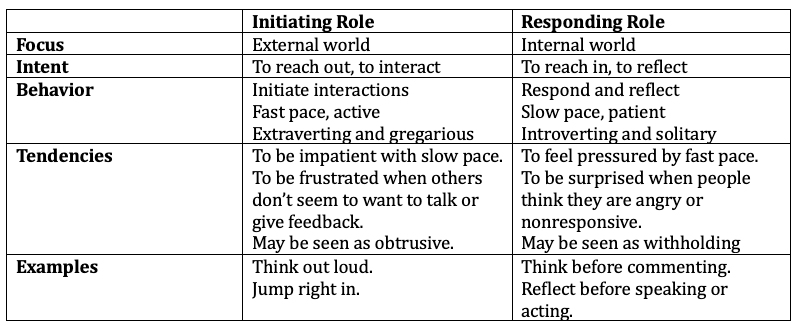
When we engage with someone, we make a choice to initiate the conversation and get the interaction started, or to take a responding role and let the other person start the interaction.
Responding and Initiating roles tend to look like this:[1]
Table 4 Initiating and Responding Roles
Attention: Outcome Focus and Process Focus
Table 5 Outcome and Process Focus
An Overview of the Four Interaction Styles
The following chart is an overview of each of the Interaction Styles. Think about how what you see applies to yourself, as well as to others who you interact with. Imagine how the differences in styles can contribute to misunderstandings and conflicts. Knowing the styles informs you—but the goal is to commit to making space for each style, instead of thinking others are just wrong. Then you can flex your behaviors to help your interactions with others be more productive and less prone to creating misunderstandings or to damaging trust.
Table 6 Brief Descriptions of the Four Interaction Styles

Learning More
Here are selected videos and printed resources to give you a more well-rounded and complete view of Berens’ Essential Motivators model.
Printed Resources
Your first stop:
Order Linda Berens’ Understanding Yourself and Others®: An Introduction to Interaction Styles 2.0, 2008 book at InterStrength. You’ll also find laminated cards and other printed material for Interaction Styles at this link. You can buy an online version of this book at InterStrength Institute Online Books.
The following are relevant selections to read in the book:
- Interaction Styles and Stress: page 34. Understanding Interaction Styles and stress can help you understand yourself and the sometimes mysterious stress reactions of others to you.
- Perspective Shifting: pages 38-39. Once you understand your own Interaction Style and how it differs with others’, the next step is to use your knowledge to flex your own behavior to increase your effectiveness in dealing with others and how well you can avoid misunderstandings.
- The Multi-Model Approach to Understanding Personality Differences: pages 41-43
Berens explains the relationship between the three psychological type models: 16 Types, Essential Motivators, and Interaction Styles.
Another book by Linda available on Amazon is:
How to apply Interaction Styles to Improve Communications Interaction Essentials: 3 Proven Strategies to Remove Communication Barriers.This 2006-page book is a gold mine of information to help you apply your knowledge.
An article by Linda in the Bullet of Psychological Type – Volume 37, Issue 3 Integrated Type™: How Using Multiple Lenses Made a Difference
Video Resources
Videos are a powerful way to explore personality type. Here is a selection for your consideration.
- Personality Types – The InterStrength™ Approach
Linda Berens introduces an overview of the InterStrength Model and its applications - History of Interaction Styles and Differences with DISC and Social Styles – Linda shares the history of how she created Interaction Styles.
- Linda Berens & Interaction Styles – Joyce Meng’s Type Talk Interview with Linda Berens Joyce interviews Linda Berens to learn the four interaction styles: Chart‑the‑Course, In‑Charge, Behind‑the‑Scenes, and Get‑Things‑Going
- Type Talks – Conversations with different Interaction Styles – Joyce Meng’s Series of Interviews with four people of each Interaction Style
- Behind-the-Scenes
- Chart-the-Course
- Get-Things-Going
- In-Charge
- Carol Linden on Natural Working Styles using Interaction Styles
- Conversations about Berens Interaction Styles – InterStrength-certified practitioner Carol Linden shares her successes with using Interaction Styles.
- Linda Berens Interview with Julia Mallory – Leader and management consultant Julia Mallory explains how Interaction Styles has become the bedrock of her practice.
- Linda Berens InterStrength Playlist – An entire YouTube playlist covering Interaction Styles, Essential Motivators, Intentional Drivers, and more.
[1] See Berens 2008, pages 45-46, for the historical roots and framework of the Social Styles research and DiSC.
[1] For more in-depth descriptions of Directing and Informing language, see Berens, 2008, page 19.
[1] For more in-depth descriptions of Responding and Initiating Roles, see Berens, 2008, page21.