
Psychological Type: From Jung to Myers to the 21st Century
By Roger R. Pearman

My introduction to type in 1974 provided a number of insights about my own growth and approach to the world. I have been involved in researching, presenting, and writing about type in an effort to elevate awareness and appropriate use of psychological type. I am currently the APTI Director of Finance and a former President of APTI. My books are still in publication (e.g., I’m Not Crazy, I’m Just Not You and Introduction to Type and Emotional Intelligence, and I used an evidence-based approach in supporting type propositions embodied in the Pearman Personality Integrator. I’m also the co-founder of TalentTelligent. I believe we are stewards of a precious legacy and knowledge which I hope we can continue to nurture and make relevant to a new generation of users of psychological type.
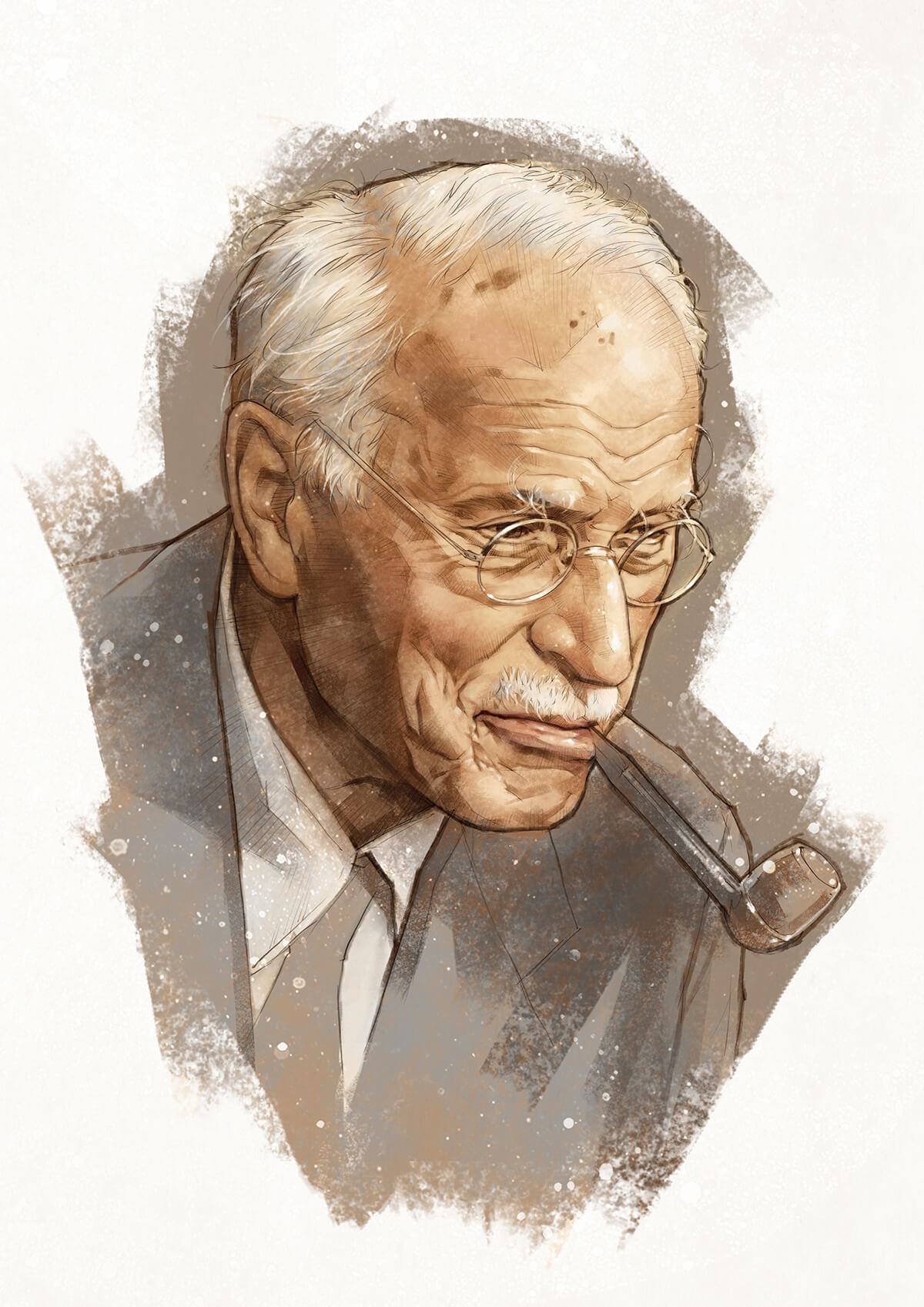
Carl Gustav Jung, 1875-1961, was a Swiss psychiatrist and psychotherapist noted as the founder of analytical psychology. A prolific writer, Jung offered many propositions about the nature of the psyche, the role of the unconscious, and the links between literature, historical accounts, and philosophy as evidence of archetypes. From the beginning of his professional life, Jung was controversial. His break from Freud, his behavior during WWII, and many of his propositions about human psychology which cannot be objectively tested have been sources of curiosity and reasons to dismiss his work.
We mention him here because his 1921 volume, Psychological Types, began what became a movement in the US. The work of Isabel Briggs Myers, based on this book, resulted first in the Myers-Briggs Type Indicator and then in millions being fascinated by personality types. By the 21st century, information about type was all over the internet—and it all began with Jung.
A comprehensive biography by Deirdre Bair (2003) reveals many historical facts. On the personal side, Bair shows that Jung was actively engaged in helping save Jewish families from Nazi control and that he helped Allied intelligence gain a deeper understanding of government workings.
On the professional side, Bair shows how Jung modified his views over the life of his work. He never wavered, however, from the proposition that the whole of an individual’s life journey should be respected—even when it included less than positive attributes. Much of Jung’s work has stood the test of time. Some of Jung’s propositions about the power of the unconscious and the role of imagery in the psychology of the individual have been confirmed by neurologists and brain scientists.
Psychological Types (1921)
C.G. Jung published Psychological Types (1921) to document his observations of patterns in the ways people think about and act on the experiences of their lives. The psychological costs of “one-sidedness” concerned him greatly, and he wanted psychologists to know how psychological patterns take hold of our mindset and approach to life, and how growth means expanding how we see and understand our experiences. He proposed eight mental functions that combine in various ways to create our mindsets.
Jung’s Eight Mental Functions
Note: the eight functions that Jung identified are complex and deeper in the way the psyche works than any brief description can provide.
With that thought in mind, see brief descriptions and definitions in Tables 1 and 2.
Table 1 The Primary Purposes of the Eight Mental Functions

Superior and Inferior Functions: In his letters and essays, Jung wrote many variations of how the eight functions work together. Jung noted that our “superior” functions are the ones within our conscious awareness, while our “inferior” functions are the ones that are hidden from our conscious awareness.
Jung’s Concerns about Assessments and Typing
Jung did not believe individuals should be “typed,” as he worried this would accelerate a one-sidedness in self-understanding. He thought psychologists should use his observations to help guide their work with clients. He did not believe that assessments were of value as they are inherently limited in the information they convey about the whole of an individual’s experience.
Jung’s Legacy
Jung lived long enough to see many of his ideas take hold in the psychological professions and the use of psychological type to facilitate understanding between therapist and client. Within two decades following his death, millions of people began actively using his framework of psychological types.
The Sixteen Types, Eight Functions – From Jung to Myers to Now
The MBTI made psychological type accessible to anyone who completed the instrument. The result: today, millions of webpages feature summaries of 16 types, and millions of people around the world explore ways to understand and apply psychological type in their personal and professional lives.
Jung created the theory; Myers built a bridge to its practical use.
Isabel Myers and her mother, Katharine Briggs, had been working on understanding patterns in the way people around them showed up. Jung’s work on psychological types informed them they were on the right track and that there was more to the story of typology.
Myers carefully extracted from Jung’s text some principles that drove her research:
- Dichotomous factors, such as extraverting and introverting, sensing and intuiting, thinking and feeling, are at work in the psychology of the individual.
- A superior (or dominant) mental function drives the individual’s mindset, aided by an auxiliary function in the opposite orientation. If the dominant function is an extraverted judging function, the auxiliary function is an introverted perceiving function. For example, if an individual’s dominant function is Extraverted Thinking, it is paired with Introverted Sensing or Introverted Intuiting to balance conscious awareness.
- While all mental functions are used in different degrees of intensity and consciousness, the dominant and auxiliary functions “drive” the individual’s adaptation to life.
Myers’ Contribution: the Judging and Perceiving Dichotomy
Myers’ work led to adding a judging and perceiving dichotomy as a means to identify an individual’s extraverted and introverted world. Judging means the individual shows the world (that is, extraverts) either Thinking or Feeling, and Perceiving means the individual shows the world (that is, extraverts) Sensing or Intuiting. What is not extraverted is an introverted process. For example, an ESTJ, extraverts Thinking and introverts Sensing; or an INFP extraverts Intuiting and introverts Feeling. By definition, an Extravert’s dominant function is extraverted, and an Introvert’s dominant function is introverted.
This is a very practical complexity.
We are a blend of introverted and extraverted functions for a reason.
The type code always reveals how psychological energy is distributed for an individual. It shows the processes that each person extraverts and introverts to maintain balance in daily life.
Myers scheme created 16 psychological types.
For example, Extraverted Thinking paired with Introverted Sensing or Intuiting represents two very different extraverted types or mental patterns. Introverted Feeling with Extraverted Sensing or Intuiting creates two very different introverted psychological types.
Myers created an inventory known as the Myers-Briggs Type Indicator, by far the most used tool; however, it isn’t the only tool designed to access an individual’s typological mindset.
To get an overview of the 16 types, accurate descriptions can be found here.
We encourage users of psychological type to carefully vet their web sources to ensure they have accurate type descriptions. Some are superficial and distorted in the way they present some types.
Psychological Type and Assessments
There is a lot of confusion about the difference between psychological type and “personality assessments.” The standards for measuring “personality” do not reasonably fit what we mean by “psychological type,” but people tend to use the terms interchangeably. Psychological type is not a “personality model”; it holds only that we have default modes for engaging in the world—and these modes change along with our experiences and our growth. Many criticisms of psychological type assessments arise from misunderstanding the purpose and uses of psychological type.
By basic methods of reliability and validity, assessments and inventories identifying psychological type elements are above standards generally found acceptable. All of the current widely available measures of psychological type have been well tested and show more than reasonable psychometric strength.
There is substantial mislabeling of psychological type as a personality model. Critics of the theory and associated assessments seem to be oblivious to the evidence collected over decades on linking psychological type to ways of operating in the world and the need for developing greater abilities to adapt to challenges.
Each of the main measures of the 16 types has accepted Myers’ propositions about a dominant and auxiliary function, and patterns of operating in day-to-day life. The measures differ in how the measurement is created and the additional elements the authors feel are affecting the psychological type pattern, such as stress or experience over time.
The Primary Tools that Use a Standard Self-Report Protocol
The MBTI published by the Myers-Briggs Company.
Type Discovery published by Core Factors
The Golden Personality Profiler published by Golden, LLC.
These tools are designed to provide a four-letter type code that summarizes the assessment results and that indicates the primary mental functions that an individual accesses and uses. They produce an overall type description and a report on various sub-scales that provide deeper insights into the various dimensions of type.
Other Approaches to Jung’s Framework
Other tools approach Jung’s framework somewhat differently. Jung defined the eight functions and noted that each individual uses them in various ways. He was very concerned about what the individual relied on in adapting to daily life and how much flexibility the individual exhibited in moving between functions. For example, how easy was it for an individual with Extraverted Thinking to flexibly access Extraverted Feeling.
The Pearman Personality Integrator, published by MHS, Inc, produces a report on an individual’s use and comfort with the eight functions and the degrees of flexibility the individual has in using the eight functions.
The Cognitive Processes Assessment developed by Dario Nardi builds on his EEG data and type patterns. Through a self-report questionnaire, the CPA provides a report on the patterns of use of the eight functions.
Whether an individual is exploring a four-letter type code or an eight-function frame of psychological type, the building blocks of type are based on Jung’s idea that external effort (extraversion) and internal effort (introversion) are essential to a well-balanced individual.
Jung’s special insight that extraverted and introverted energies take on different kinds of mental functions was profound.
To fully understand how this insight shows up in the individual psyche, consider these definitions in Table 2.
Table 2: Brief Definitions of the Eight Mental Functions

In Summary
Psychological type is an elegant and practical way to reflect on human differences. The model is useful for personal development and for interpersonal enrichment. The Association for Psychological Type International seeks to nurture the appropriate and ethical use of the model and the associated methods of assessment and awareness.
APTI is committed to
Empowering A World to
Understand, Value,
and Respect Differences